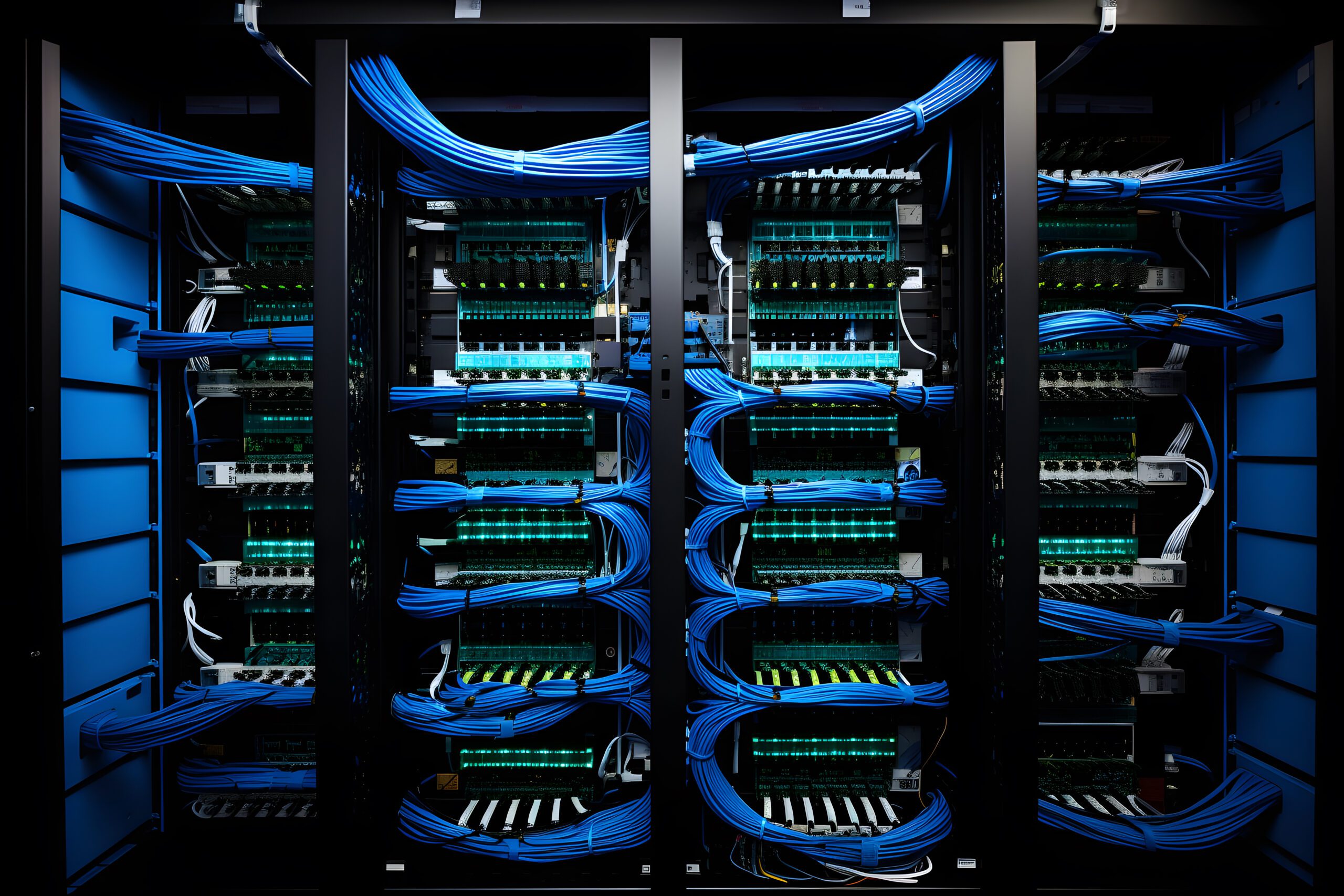
Scalable data infrastructure combines structured cabling, redundant network architecture, and future-proof design principles to support business growth. Wisconsin businesses need Cat6A or fiber cabling, modular data centers, proper environmental controls, and expert installation to ensure reliability through extreme weather conditions and expanding operational demands without costly retrofits.
Why Scalable Data Infrastructure Matters for Wisconsin Businesses
Wisconsin’s diverse economy from manufacturing powerhouses in Milwaukee to tech startups in Madison and agricultural operations throughout the state demands robust digital infrastructure. As businesses grow, their data needs expand exponentially, and inadequate infrastructure becomes a costly bottleneck.
The Real Cost of Outdated Infrastructure
Businesses operating on legacy systems face average downtime costs of $5,600 per minute according to industry research. For Wisconsin’s manufacturing sector, which contributes over $60 billion annually to the state economy, even brief network outages can halt production lines and disrupt supply chains.
Wisconsin’s Unique Infrastructure Challenges
The state’s extreme temperature fluctuations from sub-zero winters to humid summers place exceptional stress on data systems. Proper infrastructure design must account for these environmental factors to prevent thermal expansion issues in cabling and ensure consistent performance year-round.
Regulatory Compliance and Industry Standards
Wisconsin businesses in healthcare, finance, and manufacturing must comply with strict data security regulations including HIPAA, PCI-DSS, and industry-specific standards. Scalable infrastructure built to these requirements from the outset prevents expensive compliance retrofits later.
Core Components of Modern Business Network Design
A truly scalable network infrastructure consists of interconnected systems working in harmony. Understanding each component helps businesses make informed decisions about their technology investments.
Structured Cabling Systems
The foundation of any commercial IT infrastructure is its structured cabling. This organized approach to network cabling solutions creates a standardized system that supports multiple hardware applications and vendors over its lifespan—typically 15-20 years when properly installed.
Network Backbone Architecture
The backbone connects different parts of your network infrastructure. For growing businesses, a collapsed core architecture often provides the best balance of performance and scalability, consolidating distribution and core layers into a single high-capacity switch layer.
Distribution and Access Layers
Distribution layers aggregate connections from access layer switches, while access layers provide direct connectivity to end devices. Proper segmentation at these layers ensures network performance doesn’t degrade as device counts increase.
Wireless Infrastructure Integration
Modern business network design integrates wired and wireless systems seamlessly. High-density wireless access point deployment with proper channel planning ensures consistent coverage across facilities without interference.
Understanding Data Center Cabling Standards and Certifications
Professional data center cabling follows established standards that ensure performance, safety, and longevity. These aren’t mere suggestions they’re engineering requirements backed by decades of research.
TIA/EIA Standards for Commercial Buildings
The Telecommunications Industry Association’s TIA-568 standard governs commercial building cabling. For Wisconsin businesses, TIA-568.2-D specifications for twisted-pair cabling and TIA-568.3-D for fiber optics provide the blueprint for reliable installations.
ANSI/BICSI Standards
The Building Industry Consulting Service International (BICSI) provides additional guidelines for data center infrastructure. Their DCIM (Data Center Infrastructure Management) standards help businesses plan for capacity, cooling, and power requirements.
Local Wisconsin Building Codes
Wisconsin’s commercial building codes incorporate national electrical codes while adding state-specific requirements. Working with experienced providers like Roman Electric Co., Inc. ensures compliance with both state and federal regulations.
Certification and Testing Requirements
Every cable installation should undergo certification testing to verify performance meets or exceeds category specifications. This documentation becomes essential for warranty claims and proves compliance during audits.
Read Also! Structured Cabling Systems Wisconsin | Data & Network Infrastructure 2026
Choosing the Right Data Center Cabling Standards
Selecting appropriate cabling standards directly impacts your infrastructure’s scalability and longevity. The choice depends on current needs, growth projections, and budget constraints.
Category Ratings Explained
Cable categories define performance specifications:
- Cat5e: Supports 1 Gbps up to 100 meters, adequate for basic applications
- Cat6: Handles 1 Gbps with better noise immunity, 10 Gbps up to 55 meters
- Cat6A: Certified for 10 Gbps at full 100-meter distance, ideal for future-proofing
- Cat8: Supports 25/40 Gbps for specialized data center applications
Performance Margins and Future-Proofing
Installing cabling one category above current requirements provides headroom for technology upgrades. With cabling representing only 5-10% of total infrastructure costs but lasting 15+ years, over-specifying slightly makes financial sense.
Plenum vs. Non-Plenum Considerations
Wisconsin building codes often require plenum-rated cables in spaces used for air circulation. These fire-resistant cables cost more but prevent toxic smoke spread during fires a critical safety consideration for occupied commercial buildings.
Fiber vs. Copper Cabling for Commercial IT Infrastructure
The fiber versus copper decision significantly impacts scalability, distance capabilities, and long-term costs. Most modern commercial IT infrastructure uses both strategically.
Copper Cabling Advantages
Twisted-pair copper cabling remains the workhorse for desktop connections and access layer switches. It’s cost-effective, easy to terminate, and supports Power over Ethernet (PoE) for devices like IP phones, cameras, and wireless access points.
When Fiber Makes Sense
Fiber optics excel in several scenarios:
- Backbone connections between buildings or floors
- Runs exceeding 100 meters
- High-bandwidth applications requiring 10 Gbps or more
- Electromagnetic interference-prone environments common in manufacturing
Hybrid Approaches
Smart network cabling solutions use fiber for backbone infrastructure and copper for access layer connections. This “fiber to the floor, copper to the desk” approach balances performance with cost-effectiveness.
Single-Mode vs. Multi-Mode Fiber
Multi-mode fiber handles most commercial applications up to 550 meters and costs less than single-mode. However, single-mode fiber supports unlimited bandwidth over longer distances, making it essential for campus environments or future 40/100 Gbps upgrades.
Planning for Environmental Controls in Wisconsin Data Centers
Wisconsin’s climate extremes demand robust environmental management systems to protect sensitive networking equipment and maintain optimal performance.
Temperature and Humidity Management
Network equipment operates best between 64-80°F with 40-60% relative humidity. Wisconsin businesses need HVAC systems capable of handling summer heat while preventing winter cold from affecting equipment rooms.
Seasonal Considerations for Equipment Rooms
Heating systems must prevent condensation during Milwaukee’s frigid winters, when temperatures regularly drop below 0°F. Conversely, cooling systems must handle humidity during summer months when moisture levels spike.
Backup Power Systems
Wisconsin experiences periodic power disruptions from severe weather. Uninterruptible Power Supply (UPS) systems provide battery backup for immediate protection, while generator systems support extended outages common during winter storms.
Airflow and Rack Cooling Design
Hot aisle/cold aisle configurations optimize cooling efficiency in data centers. Proper rack design with blanking panels prevents recirculation, reducing cooling costs while maintaining equipment reliability.
Security & Redundancy Best Practices
Scalable infrastructure must incorporate security and redundancy from initial design rather than as afterthoughts. These elements protect business continuity and sensitive data.
Physical Security Measures
Data centers and equipment rooms require controlled access systems, surveillance cameras, and environmental monitoring. Even small Wisconsin businesses benefit from basic physical security to prevent unauthorized access and tampering.
Network Segmentation Strategies
Virtual LANs (VLANs) separate network traffic by function or security level. Guest Wi-Fi, employee networks, and critical systems should operate on distinct segments with controlled communication between them.
Redundant Pathways and Components
True redundancy means no single point of failure exists. This includes:
- Dual network paths between critical locations
- Redundant switches with automatic failover
- Multiple internet service providers
- Battery backup and generator power
Data Backup and Disaster Recovery
Wisconsin businesses must plan for disasters ranging from fires to floods. Off-site data replication and cloud backup strategies ensure business continuity when primary systems fail.
Calculating Bandwidth Requirements for Growth
Accurate bandwidth planning prevents network congestion as businesses scale. Underestimating needs leads to performance bottlenecks; overestimating wastes budget on unused capacity.
Current Usage Assessment
Begin by measuring existing network utilization during peak hours. Network monitoring tools reveal actual bandwidth consumption, helping identify patterns and growth trends over time.
Projecting Future Demands
Consider planned business growth, new applications, and technology trends. Cloud adoption, video conferencing proliferation, and IoT device deployment all increase bandwidth requirements substantially.
Bandwidth Per User Guidelines
General planning estimates suggest:
- Basic office users: 1-2 Mbps per person
- Knowledge workers with cloud applications: 5-10 Mbps per person
- Designers and engineers with large files: 20-50 Mbps per person
- Video conferencing and VoIP: Additional 2-4 Mbps per concurrent call
Oversubscription Ratios
Not every device uses maximum bandwidth simultaneously. Appropriate oversubscription ratios (typically 4:1 to 20:1, depending on network layer) allow cost-effective design without performance compromise.
Cost Breakdown and ROI of Infrastructure Upgrades
Understanding infrastructure costs helps businesses budget appropriately and recognize the return on investment from professional installations.
Initial Investment Components
A typical commercial IT infrastructure project includes:
- Structured cabling materials: $150-$300 per drop
- Labor and installation: $100-$200 per drop
- Networking equipment: $500-$5,000 per switch
- Environmental systems: $5,000-$50,000 depending on scale
- Testing and certification: $50-$100 per cable
Long-Term Operational Savings
Professional infrastructure reduces operational costs through:
- Decreased downtime and maintenance
- Lower troubleshooting time with organized systems
- Reduced cooling costs from efficient design
- Extended equipment lifespan in proper environments
Calculating Total Cost of Ownership
TCO extends beyond initial installation. Factor in electricity costs, maintenance contracts, and eventual replacement when comparing options. Quality infrastructure typically pays for itself within 3-5 years through reduced operational issues.
ROI from Improved Productivity
Network reliability directly impacts productivity. If your 50-person Wisconsin business loses just 2 hours monthly to network issues, that’s 100 hours or roughly $4,000-$6,000 in lost productivity—easily justifying infrastructure investments.
Common Infrastructure Mistakes Wisconsin Businesses Make
Learning from common pitfalls helps businesses avoid expensive corrections later. These mistakes appear repeatedly across commercial projects.
Undersizing for Growth
The most frequent error is designing for current needs without a growth margin. Retrofitting infrastructure into operational businesses costs 3-4 times more than building scalability initially.
Skipping Professional Installation
DIY or bargain installations often fail certification testing and create long-term reliability problems. Wisconsin businesses save money working with established providers like Roman Electric Co., which brings over 90 years of electrical and data systems expertise.
Ignoring Documentation
Proper documentation showing cable locations, network topology, and configuration details proves invaluable during troubleshooting and expansions. Many businesses skip this critical step during initial installation.
Mixing Standards and Vendors Haphazardly
While multi-vendor environments are common, mixing cable categories or standards within infrastructure segments creates performance bottlenecks and troubleshooting nightmares.
Neglecting Environmental Requirements
Equipment rooms doubled as storage spaces or lacking proper cooling fail prematurely. Wisconsin’s temperature extremes make environmental controls especially critical for reliability.
Overlooking Cable Management
Poor cable management creates maintenance challenges and fire code violations. Proper pathways, labeling, and organization pay dividends throughout the infrastructure’s lifespan.
Emerging Technologies Shaping Business Network Design
Staying informed about technology trends helps businesses plan infrastructure that supports tomorrow’s requirements, not just today’s needs.
Wi-Fi 7 and High-Density Wireless
The emerging Wi-Fi 7 standard (802.11be) delivers multi-gigabit wireless speeds and improved reliability in crowded environments. Infrastructure supporting these access points requires enhanced backhaul capacity typically 2.5 Gbps or 10 Gbps connections.
Power over Ethernet Evolution (PoE++)
IEEE 802.3bt (PoE++) delivers up to 100 watts per port, supporting power-hungry devices like PTZ cameras, digital displays, and thin clients. Modern installations should specify PoE++ capability even if current devices don’t require it.
Edge Computing Requirements
As businesses deploy edge computing for reduced latency and local processing, distributed infrastructure becomes essential. This approach requires robust connectivity to remote locations challenging in Wisconsin’s rural areas.
Software-Defined Networking (SDN)
SDN separates network control from hardware, enabling centralized management and automated configuration. While requiring compatible switches, SDN simplifies network management as businesses scale across multiple locations.
Internet of Things (IoT) Integration
Manufacturing facilities and office buildings increasingly deploy IoT sensors for everything from energy management to predictive maintenance. Each sensor requires network connectivity, potentially adding hundreds or thousands of devices to your infrastructure.
Cloud Integration Considerations
Hybrid cloud strategies require substantial internet bandwidth and redundant connections. As Wisconsin businesses adopt cloud services, infrastructure must support reliable, high-speed WAN connectivity.
Selecting Network Equipment for Scalability
Hardware choices significantly impact scalability, performance, and long-term costs. Understanding selection criteria helps businesses make informed decisions.
Managed vs. Unmanaged Switches
Managed switches provide essential features for business networks: VLANs, Quality of Service (QoS), and monitoring capabilities. While costlier than unmanaged switches, they’re essential for scalable commercial IT infrastructure.
Stacking and Chassis Options
Stackable switches connect multiple units into a single logical switch, simplifying management. Chassis-based switches offer maximum flexibility for large deployments but cost significantly more.
Port Density and Expansion Planning
Choose switches with 20-30% unused ports for near-term growth. Modular switches allow adding port capacity without replacing core equipment, extending useful life and protecting initial investment.
Vendor Ecosystem Considerations
Standardizing on reputable vendors (Cisco, HPE, Juniper) ensures long-term support and compatibility. According to Cisco research, cohesive network ecosystems reduce troubleshooting time by 40-60% compared to mixed-vendor environments.
Real Case Study: Milwaukee Manufacturing Expansion
A mid-sized Milwaukee manufacturing company illustrates the practical benefits of proper infrastructure planning and professional implementation.
The Challenge
Milwaukee Precision Components (fictional name), a metal fabrication company with 80 employees, operated from a 50,000 square foot facility using 15-year-old Cat5 cabling. Planned expansion to 120 employees and new CNC machines with network monitoring created urgent infrastructure needs.
Assessment and Planning
Working with Roman Electric Co.’s data and security systems team, engineers assessed existing infrastructure and designed a scalable solution. The plan included Cat6A cabling throughout, fiber backbone between buildings, and upgraded network switches supporting 10 Gbps connections.
Implementation Approach
The phased installation occurred during scheduled downtime to minimize production impact. Roman Electric’s experience with Wisconsin commercial facilities ensured work proceeded efficiently despite February weather challenges.
Results and Benefits
The company experienced:
- Zero network-related downtime during the six-month implementation
- 10x bandwidth increase supporting new manufacturing systems
- Infrastructure ready for 200+ employees without additional cabling
- Improved security through network segmentation
- 30% reduction in cooling costs from improved equipment room design
Investment and Timeline
Total project cost: $125,000 including materials, labor, new switches, and environmental controls. The company recovered costs within 18 months through increased productivity and avoided downtime.
Working with Professional Infrastructure Providers
Complex infrastructure projects benefit enormously from experienced professionals who understand both technical requirements and business needs.
Benefits of Established Wisconsin Providers
Local providers like Roman Electric Co., Inc. offer advantages beyond technical expertise:
- Understanding Wisconsin-specific building codes and climate challenges
- Established relationships with local inspectors and officials
- Rapid response for service and support needs
- Deep experience across diverse Wisconsin industries
Credentials and Certifications to Verify
Quality providers maintain relevant certifications:
- BICSI credentials (RCDD, NTS, Technician)
- Manufacturer certifications (Cisco, CommScope, Panduit)
- Electrical licenses appropriate to scope of work
- Insurance and bonding for commercial projects
Project Management and Communication
Professional providers assign dedicated project managers who coordinate timelines, communicate progress, and resolve issues quickly. This structured approach prevents the miscommunication that plagues infrastructure projects.
Warranty and Long-Term Support
Reputable installations include comprehensive warranties covering materials and workmanship—typically 15-25 years for structured cabling. Post-installation support ensures quick resolution of any issues that emerge.
Infrastructure Maintenance and Monitoring
Even well-designed infrastructure requires ongoing maintenance and monitoring to maintain optimal performance as businesses grow and technology evolves.
Regular Inspection Schedules
Annual physical inspections identify potential issues before they cause outages:
- Cable pathway congestion from additions
- Environmental system performance
- Connection integrity and cleaning
- Physical security system functionality
Network Monitoring Tools
Continuous monitoring detects performance degradation, security threats, and capacity constraints. Modern tools provide dashboards showing real-time network health and historical trends.
Documentation Updates
Infrastructure documentation should reflect all changes, additions, and modifications. This living document proves invaluable during troubleshooting and planning future expansions.
Preventive Maintenance Programs
Regular maintenance programs from providers like Roman Electric’s service team catch small issues before they become expensive problems, extending infrastructure lifespan and reliability.
Final Checklist Before Implementation
Before beginning infrastructure upgrades, verify these critical elements to ensure project success and avoid costly oversights.
Business Requirements Analysis
- Document current and projected bandwidth needs
- Identify critical applications and latency requirements
- List compliance and regulatory obligations
- Define budget constraints and ROI expectations
Site Assessment Completion
- Survey existing infrastructure and equipment
- Identify environmental challenges and requirements
- Verify adequate electrical power and cooling capacity
- Assess physical security needs and access controls
Design Validation
- Confirm cabling standards meet current and future needs
- Verify redundancy at appropriate levels
- Validate network topology supports business requirements
- Review equipment specifications and compatibility
Vendor Selection
- Verify credentials and experience
- Check references from similar Wisconsin businesses
- Review warranty terms and service level agreements
- Confirm proper licensing and insurance
Project Planning
- Establish realistic timelines with milestone dates
- Define communication protocols and escalation procedures
- Plan for business continuity during implementation
- Schedule final testing and certification
Post-Installation Verification
- Complete certification testing on all cabling
- Verify network performance meets design specifications
- Receive complete documentation and as-built drawings
- Confirm training on systems and management tools
Future-Proofing Your Wisconsin Business Infrastructure
Technology evolution continues accelerating, but thoughtful design principles help infrastructure remain relevant for decades despite rapid changes.
Capacity Planning Beyond Immediate Needs
Design infrastructure supporting 2-3x current requirements. This headroom accommodates unforeseen applications and technologies without requiring complete overhauls.
Modular Design Principles
Modular approaches allow incremental upgrades to specific components without disrupting entire systems. This flexibility proves especially valuable as businesses expand into new Wisconsin locations or market segments.
Standardization Benefits
Maintaining consistent standards across all locations simplifies management, troubleshooting, and training. Staff become proficient with standard configurations, reducing support costs.
Technology Lifecycle Planning
Different infrastructure components have varying lifespans:
- Structured cabling: 15-25 years
- Network switches: 5-7 years
- Wireless access points: 3-5 years
- Servers and storage: 4-6 years
Planning replacement cycles prevents emergency purchases and allows budgeting for inevitable upgrades.
Taking Action: Your Infrastructure Upgrade Path
Wisconsin businesses ready to upgrade their data infrastructure should follow a structured approach ensuring optimal outcomes.
Initial Consultation and Assessment
Begin with professional assessment from experienced providers. Roman Electric Co. offers comprehensive evaluations identifying infrastructure gaps, code violations, and improvement opportunities specific to Wisconsin business environments.
Phased Implementation Strategy
Large infrastructure projects often proceed in phases, balancing business disruption against improvement urgency. Critical areas upgrade first, followed by lower-priority spaces during scheduled downtimes.
Training and Knowledge Transfer
Ensure staff understand new systems and capabilities. Provider training sessions help businesses maximize infrastructure investments and identify issues quickly.
Ongoing Partnership
Infrastructure isn’t a one-time project but an ongoing business requirement. Establishing relationships with providers like Roman Electric ensures responsive support as needs evolve and challenges emerge.
Ready to Build Scalable Infrastructure for Your Wisconsin Business?
Your business deserves network infrastructure that supports growth rather than limiting it. Whether you’re expanding operations, upgrading outdated systems, or planning new facilities, proper infrastructure design makes the difference between seamless scaling and costly retrofits.
Roman Electric Co. brings over 90 years of electrical and data systems expertise to Wisconsin businesses. Our experienced team understands the unique challenges of operating in Wisconsin’s climate while meeting modern technology demands. From initial assessment through installation, testing, and ongoing support, we ensure your infrastructure investment delivers reliable performance for decades.
Get Started Today
Schedule a complimentary infrastructure assessment to discover how modern network cabling solutions can support your business growth. Our team will evaluate your current systems, identify improvement opportunities, and design scalable solutions matching your budget and timeline.
Learn more: Explore our data and security systems services
Don’t let outdated infrastructure limit your Wisconsin business potential. Partner with the trusted professionals who’ve been keeping Wisconsin businesses connected and productive since the 1920s.