Electrical problems in a commercial facility rarely begin with a dramatic failure. A loose connection, worn part, overloaded circuit, damaged wiring, or poor equipment can cause an outage or safety problem without warning.
Preventive electrical maintenance involves checking, testing, servicing, and fixing electrical equipment. This is done before any failures can disrupt operations or cause unnecessary risks. A good maintenance program does more than fix equipment after it breaks. It helps facility teams to check equipment, spot issues, plan repairs, and keep electrical systems safe.
For commercial and industrial facilities, a good maintenance programme depends on several factors. This includes the installed equipment, how it’s used, its condition, manufacturer requirements, relevant standards, and the risks of failure. NFPA 70B provides a framework for preventive and predictive maintenance of electrical, electronic, and communication systems and equipment. OSHA sets safety practices for workers facing electrical hazards.
Key Takeaways
- Preventive electrical maintenance helps find and fix equipment issues before they become bigger problems.
- Maintenance schedules must align with the equipment type, its condition, the operating environment, manufacturer requirements, and facility risks. They shouldn’t depend on a single universal interval.
- Visual inspections, equipment checks, electrical tests, and diagnostic methods, like infrared scanning, provide key insights into the system’s condition.
- Maintenance records are important. They list past findings, repairs, current issues, and changes in equipment conditions.
- Electrical maintenance needs proper safety practices. Qualified personnel should handle work that exposes them to electrical hazards.
- A professional maintenance program should explain its scope, inspection methods, documentation process, corrective-action priorities, and approach to changing equipment conditions.
What Is Preventive Electrical Maintenance?
Preventive electrical maintenance helps keep an electrical system running smoothly. It involves planned actions like inspections, testing, cleaning, servicing, assessing conditions, and making necessary repairs. The goal isn’t just to make equipment look clean or finish a maintenance checklist. The goal is to find conditions that might impact electrical safety, reliability, performance, or equipment life. We need to address these issues before they turn into bigger problems.
A commercial electrical system can include service equipment, switchgear, distribution panels, circuit breakers, transformers, disconnects, wiring, grounding and bonding components, lighting systems, emergency power equipment, controls, motors, and other connected equipment. Each component has different maintenance needs. A good preventive maintenance program isn’t just a copied calendar from another building. It should reflect the actual equipment and operating conditions of the facility.
Preventive vs. reactive electrical maintenance
Reactive maintenance happens after a problem becomes noticeable. A breaker keeps tripping, equipment stops working, lights go out, or a part is damaged. Then, someone steps in to fix the problem.
Preventive maintenance moves that process earlier.
Instead of waiting for a failure, the maintenance team looks for conditions that could lead to one. This may include abnormal temperature, signs of decline, damaged parts, bad connections, contamination, changes in equipment condition, or other issues found during inspection and testing. The distinction matters because the cost of an electrical problem is not limited to the replacement part. A failure can impact production, building operations, safety, scheduling, employees, customers, and related equipment.
Why Preventive Electrical Maintenance Matters for Commercial Facilities
Electrical systems support almost every part of a modern commercial facility. Reliable electrical infrastructure is essential for lighting, HVAC equipment, machinery, communications, security systems, computers, production equipment, and life-safety systems.
A maintenance program therefore serves two related purposes: risk management and reliability management.
It can identify developing electrical problems.
Some electrical problems are not obvious during normal operation. A system may continue working while a component is gradually deteriorating. Planned inspections and proper diagnostic tests can show details that regular operations miss. For example, thermal imaging can help identify abnormal heat patterns that warrant further investigation. Roman Electric lists infrared scanning among its commercial electrical service and maintenance capabilities.
The finding itself is not automatically proof of a defect. A qualified professional must interpret the result based on the equipment, load, operating conditions, and the requirements set by the manufacturer or industry.
It can reduce unplanned downtime.
A failed electrical component can interrupt more than one device. An electrical issue can affect production equipment, lighting, refrigeration, HVAC, data systems, or other building functions. It all depends on the system and facility. Preventive maintenance does not eliminate failures. It helps facility teams spot issues early. This way, they can plan corrective work before an unexpected failure happens.
It supports safer electrical work.
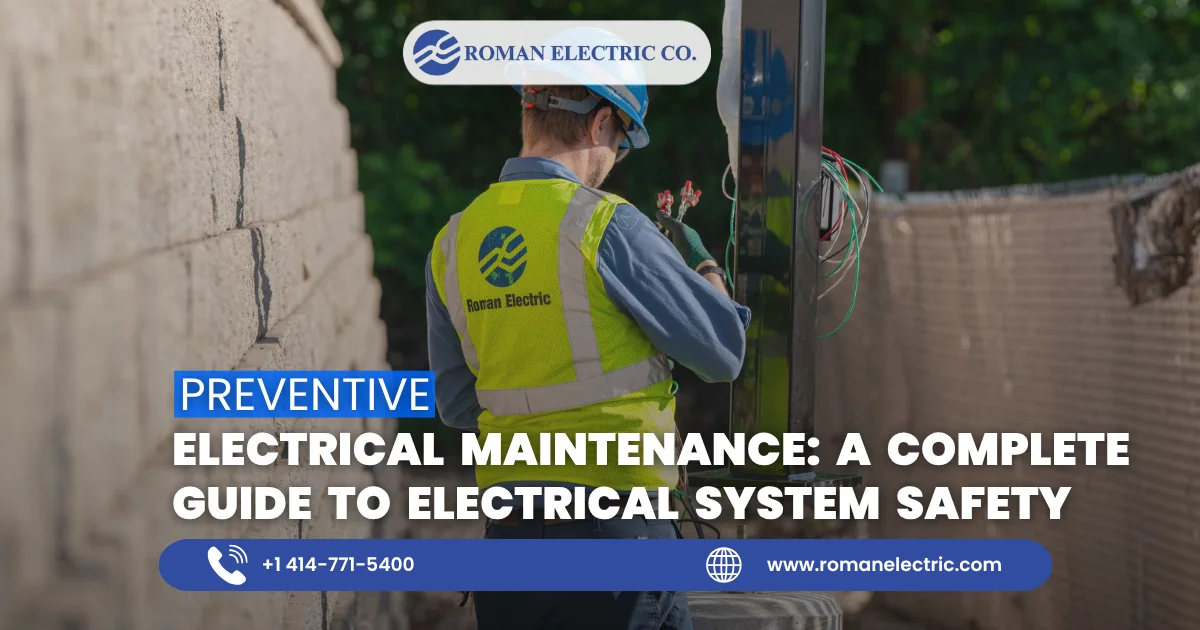
Maintenance itself must be performed safely. OSHA says workers must follow safety practices when they work on or near energized equipment. For work on exposed, deenergized equipment, OSHA requires lockout/tagout procedures. It’s also important to verify that the equipment is truly deenergized. Only qualified people can work on exposed, energized parts. They must meet the necessary requirements. Preventive maintenance is more than just a simple visual checklist. It should not be seen as something anyone can do inside electrical equipment.
It improves maintenance planning.
A documented maintenance history helps facility managers determine if equipment needs repair, monitoring, upgrading, or replacement. The facility can create a priority list for corrective work. This list should focus on equipment condition and operational risk. It shouldn’t treat every problem as an emergency.
What Does Preventive Electrical Maintenance Include?
The exact scope depends on the facility. A maintenance program may combine visual inspection, physical condition assessment, electrical testing, cleaning, functional checks, diagnostic techniques, documentation, and corrective work. The important point is that each activity should have a reason.
Visual inspection and condition assessment
Visual inspection is often an important starting point. A skilled maintenance expert may look for signs such as damaged enclosures, moisture, contamination, or wear. They also check for unusual conditions or other clues that the equipment needs extra care. Condition assessment should also consider maintenance history and previous findings.
NFPA 70B materials outline equipment condition assessment. They include physical condition, past maintenance results, monitoring alerts, and insights from predictions. That makes maintenance history more valuable than a simple “checked” box. The question is not merely whether equipment was inspected. The question is what its condition tells the facility about future risk.
Connections, conductors, and wiring
Electrical connections and conductors need proper care. Poor connections, damaged wires, and wear can impact system reliability and safety. Maintenance professionals can check accessible parts. They can also perform tests based on the equipment and maintenance plan.
Any work requiring exposure to electrical hazards must follow applicable safety procedures. OSHA requires that equipment be deenergized and locked out/tagged out when necessary. Before employees work on exposed equipment, they must verify that it is deenergized.
Circuit breakers and protective devices
Circuit breakers and other protective devices are key to protecting electrical systems. Maintenance includes checking and testing to see if equipment is in good condition. The exact steps depend on the type of equipment, the manufacturer’s needs, the system setup, and the relevant standards.
Repeated breaker trips should not simply be treated as an inconvenience. They can indicate an underlying electrical or equipment problem that deserves investigation.
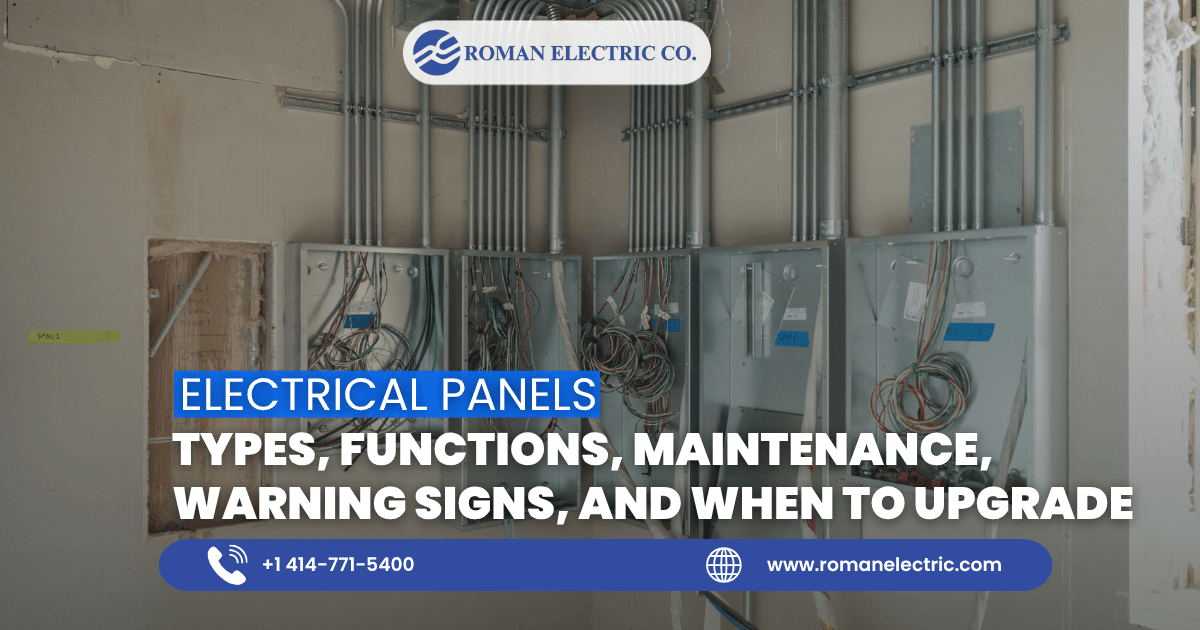
Electrical panels and distribution equipment
Distribution equipment should remain accessible, properly maintained, and suitable for its operating environment. Maintenance can focus on condition, cleanliness, signs of wear, connections, safety devices, labeling, and other specific needs for equipment. The objective is not to make an electrical room look organized for its own sake. Good conditions and documentation help qualified personnel understand and safely service the system.
Transformers and other major equipment
Large electrical equipment needs more specialised inspection and testing than regular building parts. The maintenance program should factor in the equipment type, operating environment, condition, manufacturer instructions, and possible failure impacts. A commercial maintenance program should start with an inventory and condition assessment. This is better than just using a random list of tasks.
Emergency and backup power systems
Facilities relying on emergency or standby electrical systems need careful maintenance planning. This planning should match their operational importance. Generators, automatic transfer equipment, batteries, and other electrical parts may need special inspection, testing, and maintenance. A backup system that isn’t well maintained might not offer the protection you expect during a power outage.
Lighting and controls
Lighting maintenance is also part of broader electrical system management. Replacing failed lamps is only one part of the picture. Facility teams should consider controls, emergency lighting, exterior lighting, energy efficiency, and the state of related electrical components. Roman Electric offers commercial services like energy-efficient lighting upgrades, outdoor lighting, repairs, and electrical maintenance.
Electrical Testing and Diagnostic Methods
Preventive electrical maintenance can involve several diagnostic methods. The appropriate method depends on the equipment and the question being investigated.
Infrared scanning
Infrared scanning, or thermal imaging, can spot unusual temperature patterns in electrical equipment. The value is in finding conditions that deserve investigation before they become a more serious problem. A thermal image alone does not establish the cause of an abnormal reading. Many factors can affect thermal results. These include load, ambient temperature, equipment design, connections, and component condition. Interpretation therefore matters as much as image collection. Roman Electric includes infrared scanning in its commercial electrical maintenance and service offerings.
Electrical testing
Electrical testing helps check the condition and performance of equipment and protective devices. Testing should be selected according to the equipment and maintenance objective. Not every component needs the same test. Also, don’t assume testing frequency. You should consider the maintenance needs and the equipment’s condition first. NFPA 70B says that maintenance intervals can vary depending on the equipment’s condition and risk.
Power quality analysis
Power quality problems can affect sensitive equipment and facility operations. The investigation may explore issues such as voltage disturbances, harmonics, imbalance, and other electrical characteristics, depending on the system. Power quality analysis is useful for sporadic equipment problems. It helps when standard visual checks can’t explain ongoing issues.
The diagnostic question needs to be clear: What electrical condition are we examining, and what decision will the answer help us make?
How Often Should Electrical Maintenance Be Performed?
There is no single maintenance interval that is appropriate for every commercial building. The right schedule depends on several factors: equipment type, operating environment, condition, manufacturer instructions, maintenance history, system criticality, and the impact of equipment failure. NFPA 70B provides a framework for electrical equipment maintenance and includes condition-based considerations. Its maintenance info also notes that intervals might change based on the risk to staff or facility operations if equipment fails. That means a facility should avoid two opposite mistakes.
The first is to keep every part on a set schedule, ignoring its actual condition. The second is waiting until equipment fails before doing meaningful maintenance. A better approach is to create a documented electrical maintenance program. First, identify the equipment included. Then, determine the right tasks and intervals. Next, document your findings. Finally, adjust the program if the equipment condition or operating risk changes.
What Factors Should Determine a Maintenance Schedule?
A maintenance schedule should reflect the facility rather than an internet checklist. Humanity has somehow survived long enough to invent spreadsheets, so they may as well contain useful information.
Equipment type
Different electrical components have different maintenance requirements. Switchgear, transformers, circuit breakers, batteries, wiring devices, emergency power systems, and other equipment need different handling.
Operating environment
Dust, moisture, heat, vibration, and corrosive conditions can affect how equipment performs. A part in a tough environment might need a different maintenance plan than similar gear in cleaner, easier conditions.
Equipment condition
Previous findings matter. If inspections or tests reveal problems or changes, the maintenance program may need to be more frequent or detailed.
Criticality
Not every piece of electrical equipment has the same operational consequence if it fails. Equipment for critical operations, key building functions, or safety systems needs extra attention. This is because failure can have serious consequences.
Manufacturer instructions
Manufacturer documentation can provide important equipment-specific maintenance information. Electrical preventive maintenance should follow the manufacturer’s guidelines, industry standards, and local rules when needed. NFPA material specifically addresses manufacturer instructions and applicable industry standards in the context of electrical preventive maintenance.
A Practical Preventive Electrical Maintenance Workflow
A useful maintenance program is more than a recurring service appointment. It is a cycle of assessment, maintenance, documentation, and follow-up.
1. Build an electrical equipment inventory
Start by identifying the major electrical equipment and systems within the facility. The inventory can include distribution equipment, panels, breakers, transformers, emergency power equipment, lighting systems, controls, motors, and other significant electrical assets. This establishes what the maintenance program actually covers.
2. Establish baseline condition
Document the existing condition of important equipment. Existing defects, past repairs, operating history, problem areas, and equipment documents help build a strong baseline. Without a baseline, future inspections have less context.
3. Identify equipment-specific maintenance requirements
Determine what inspection, testing, servicing, and documentation each equipment category requires. The maintenance plan should consider these factors: manufacturer instructions, applicable standards, equipment condition, operating environment, and facility risk.
4. Perform appropriate inspections and testing
Qualified staff can carry out the inspections and tests needed for the equipment and maintenance goals. Infrared scanning and other diagnostic methods can provide useful insights into equipment condition.
5. Document findings
A maintenance report should include four key points: what was inspected, what was found, what actions were taken, and what still needs attention. Documentation creates a history that can support future maintenance decisions.
6. Prioritize corrective work
Not every finding has the same urgency. A good maintenance program sorts issues into three categories: those needing immediate attention, those to schedule later, and those to monitor over time.
7. Reassess the program
Maintenance should evolve as equipment condition changes. If there’s a repeated defect, a major repair, equipment replacement, facility expansion, a change in operations, or a change in risk, it could be time to review the maintenance program.
Warning Signs That Should Prompt Electrical Investigation
Preventive maintenance does not replace attention to problems between scheduled visits.
Facility staff should report unusual electrical issues. They should not keep resetting equipment or try unauthorized repairs.
Examples include:
- Repeated circuit breaker trips
- Flickering or inconsistent lighting
- Unusual heat around electrical equipment
- Burning odors near electrical equipment
- Unusual buzzing, crackling, or other electrical sounds
- Visible damage to electrical components
- Unexpected equipment shutdowns
- Recurring electrical faults
- Unexplained changes in equipment performance
These signs do not identify a specific cause by themselves. They indicate that further evaluation may be appropriate. Only qualified personnel should open energized electrical equipment or do internal repairs. OSHA’s electrical safety rules separate qualified from unqualified persons. They also set clear practices for working with electrical hazards.
Common Preventive Electrical Maintenance Mistakes
Even facilities that perform regular maintenance can miss important parts of the process.
Treating maintenance as a checklist
A checklist can help organize work, but checking a box does not establish equipment health. Good maintenance records should include findings, relevant measurements, corrective actions, any unresolved issues, and follow-up tasks.
Using the same schedule for every piece of equipment
A universal schedule can ignore differences in equipment, condition, environment, and criticality. A risk- and condition-aware program is more useful than simply assigning every asset the same interval.
Waiting for visible problems
Electrical equipment can develop conditions that are not obvious during normal operation. Good diagnostic tests and condition checks can provide helpful insights before a failure occurs.
Ignoring recurring failures
Repeated breaker trips, equipment shutdowns, and electrical faults are all connected issues. A recurring symptom can be evidence that the underlying cause has not been resolved.
Performing electrical work without proper controls
Maintenance teams should never sacrifice electrical safety to avoid downtime. OSHA sets rules for working with energized equipment. This includes requirements for deenergization and verifying the equipment’s status when needed.
Failing to document repairs
If maintenance findings vanish during an undocumented service call, the facility loses important information. A documented history helps future technicians see what has changed, which problems keep coming up, and where more focus is needed.
Preventive Electrical Maintenance vs. Predictive Maintenance
The terms preventive and predictive maintenance are related but not identical.
Preventive maintenance includes regular tasks that keep equipment running smoothly and reduce the risk of breakdowns.
Predictive maintenance uses condition data and diagnostic methods to spot changes in equipment. It helps decide when intervention is needed.
Modern electrical maintenance programs can use both approaches. A facility might plan inspections and servicing. It can also use diagnostic information to find equipment needing further investigation. NFPA 70B is about preventive and predictive maintenance for electrical, electronic, and communication systems and equipment. The goal is clear: make maintenance choices using evidence, not just waiting for failures.
How Preventive Maintenance Supports Electrical Safety
Electrical safety is not created by one inspection. It depends on the equipment’s condition, how it’s used, and maintenance quality. Employee training, safety practices, documentation, and problem handling also play a role.
The NFPA outlines an electrical safety framework linking installation, maintenance, and workplace safety. This is done through NFPA 70, NFPA 70B, and NFPA 70E. The maintenance component is key. Equipment condition affects the safety of those working with or near electrical systems. OSHA similarly requires safety-related work practices appropriate to the electrical hazards involved. Qualified individuals need the right skills and knowledge about the equipment and hazards. Also, employees facing electrical risks must receive proper training.
Electrical maintenance is key to a facility’s safety and reliability. It shouldn’t be seen as just ordinary housekeeping.
When Should a Business Consider a Professional Maintenance Program?
A professional electrical maintenance program is valuable for facilities with complex electrical setups. It helps when there’s critical equipment, aging systems, or limited internal expertise. It’s helpful for areas with frequent electrical problems or major power outages. The first step is not necessarily signing a long-term contract. It is understanding the condition and requirements of the facility’s electrical system.
A qualified electrical contractor can help with several tasks. They can identify the equipment in the maintenance scope. They also determine the right inspection and diagnostic activities. Additionally, they document findings and prioritise corrective work. Roman Electric offers commercial electrical services and maintenance plans. These plans cover regular inspections, testing, repairs, and proactive system upkeep. Its commercial services include infrared scanning, troubleshooting, and repair. They also provide Arc Flash and Coordination Studies, emergency response services, and upgrades for energy-efficient lighting.
The right provider should be able to explain what will be inspected, why each activity is included, how findings will be documented, what conditions require corrective action, and how the maintenance program will change as equipment condition changes.
Questions to Ask Before Choosing an Electrical Maintenance Provider
Before choosing a maintenance provider, facility managers should dig deeper than just a basic promise of “preventive maintenance.”
Ask:
- What electrical equipment will the program cover?
- How will maintenance intervals be determined?
- Which inspections and tests are included?
- How are abnormal findings documented?
- How are urgent findings distinguished from routine recommendations?
- Will the maintenance history be available to the facility?
- How are manufacturer requirements incorporated?
- How are electrical safety and deenergization procedures handled?
- Can the provider perform diagnostic services when appropriate?
- What happens when maintenance identifies equipment that needs repair or replacement?
- Can the program adapt when the facility changes or equipment condition changes?
The answers should reveal whether the provider has a structured maintenance process or is simply selling recurring visits.
Building a Better Electrical Maintenance Strategy
The strongest maintenance strategy is not necessarily the one with the longest checklist. It provides useful information and helps turn that information into action. Start with an accurate equipment inventory. Establish baseline conditions. Identify the maintenance requirements that apply to each equipment category. Use inspections and testing that answer meaningful questions. Document findings. Prioritize corrective work according to condition and risk. Then review the program as the facility and its electrical equipment change.
That approach changes preventive electrical maintenance from a regular cost into a structured system. This system helps manage electrical condition and operational risk.
Frequently Asked Questions
What is preventive electrical maintenance?
Preventive electrical maintenance involves inspecting, testing, and servicing equipment. It assesses conditions and performs corrective work. This keeps electrical systems running well. It also finds problems before they cause failures or risks.
How often should commercial electrical maintenance be performed?
There is no single interval that applies to every commercial facility. The right schedule depends on several things: the type of equipment, its condition, the operating environment, manufacturer requirements, maintenance history, system criticality, and any relevant regulations.
Does preventive electrical maintenance eliminate electrical failures?
No. Preventive maintenance cannot guarantee that equipment will never fail. Its goal is to improve visibility of equipment condition, address known issues, and reduce risks from deterioration and unexpected failures.
What is infrared scanning used for in electrical maintenance?
Infrared scanning can identify abnormal temperature patterns that may warrant additional investigation. The results need context because temperature differences can come from various causes.
Can facility employees perform electrical maintenance themselves?
It depends on the work, employee qualifications, equipment, and applicable safety requirements. Work involving electrical hazards must follow appropriate safety procedures. OSHA has clear rules for qualified people and for workers facing electrical hazards.
What should an electrical maintenance report include?
A good report should list the inspected equipment or systems. It should include relevant findings, any testing done, and corrective actions taken. Also, it should note unresolved issues and suggest follow-up steps. Good documentation creates a maintenance history that supports future decisions.
Conclusion
Preventive electrical maintenance means looking after your electrical system to stop issues before they happen. A structured program helps facility teams understand equipment conditions. It lets them spot issues, plan repairs, and keep operations safer and more reliable. The best way isn’t just a standard checklist or a random maintenance schedule. It’s a documented program based on the facility’s real equipment, operating conditions, maintenance needs, and risks.
For businesses that need help with commercial electrical systems, Roman Electric provides custom service and maintenance plans. These include inspections, testing, repairs, infrared scanning, troubleshooting, and more.