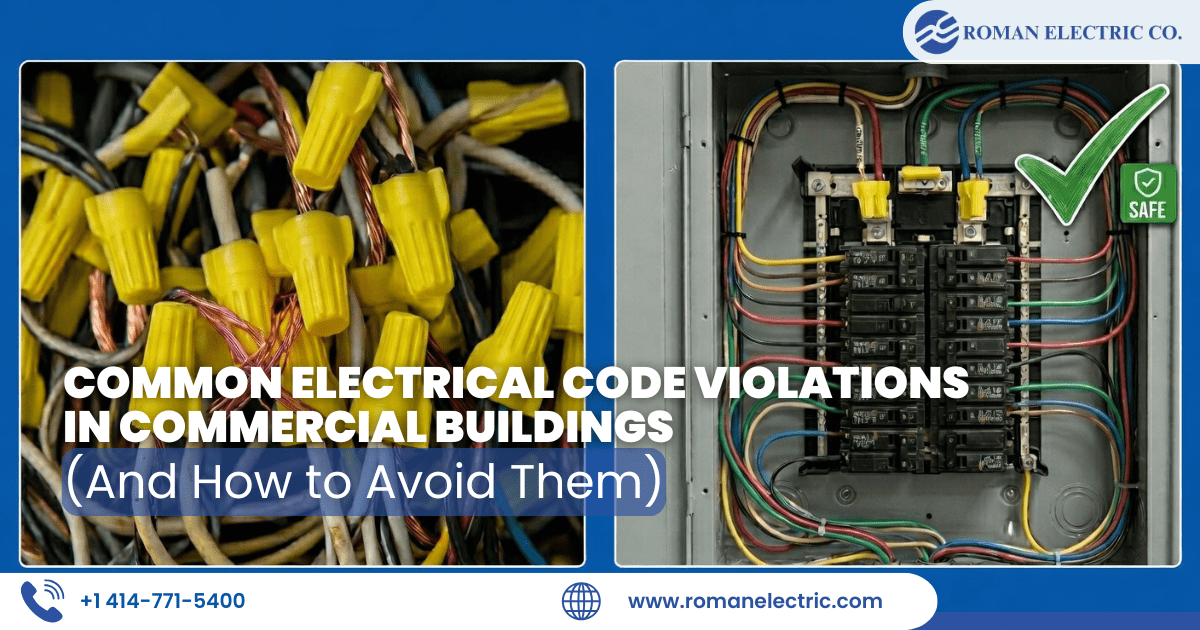
Electrical code violations have a funny way of hiding in plain sight. I walked through a commercial building last year with an owner who was convinced his property was in great shape. He’d owned it for twelve years, never had a major problem, and figured everything was fine. We found four separate violations before we even got to the second floor. Overloaded panel, missing GFCI outlets in the bathroom, open junction boxes above a drop ceiling, and storage stacked right up against the electrical panel. None of it looked dangerous on the surface. All of it was. At Roman Electric, these kinds of walkthroughs happen regularly, and almost every commercial building we go into has something that needs attention.
Why These Codes Actually Matter
I know code compliance sounds like dry, boring stuff. It’s really not when you understand what’s behind it. The National Electrical Code violations exist because electricians, investigators, and safety professionals spent decades studying what causes electrical fires and electrocution injuries in buildings. Every requirement in that code traces back to something that went wrong somewhere and hurt someone.
Commercial buildings run harder than homes. More equipment, longer hours, bigger loads on the system. The standards are stricter because the stakes are higher. A small wiring issue in a house is bad. The same issue in a building with fifty people in it is worse.
Violations That Show Up Over and Over Again
These aren’t rare or obscure problems. These are the things inspectors find constantly in commercial properties across the country.
Overloaded Electrical Panels
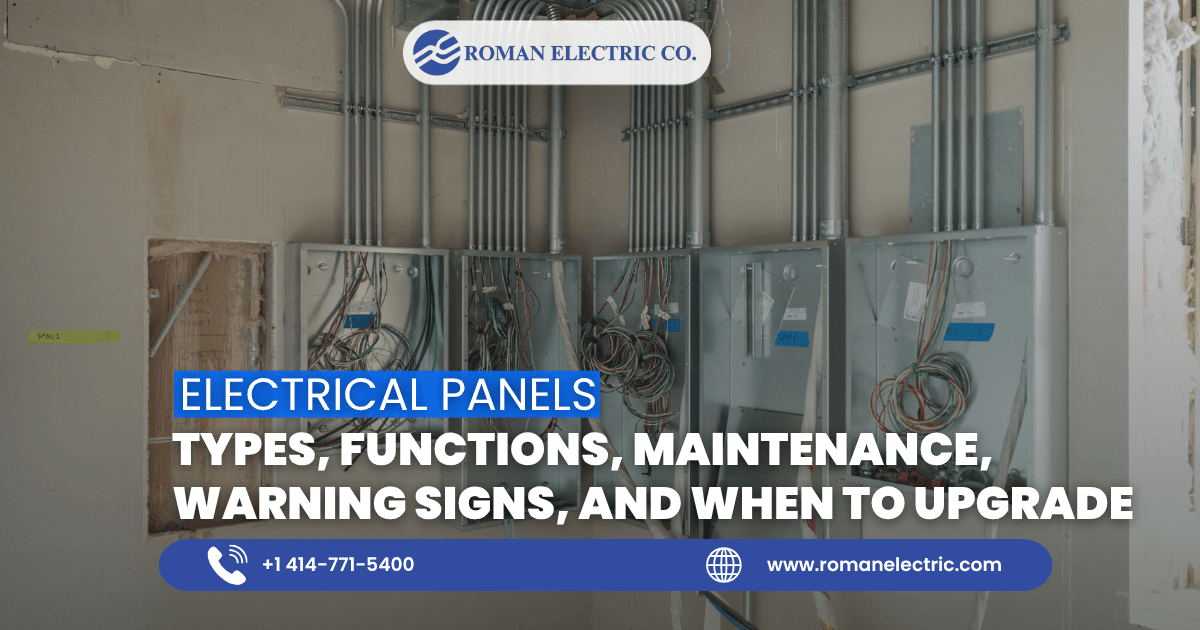
Buildings change but panels don’t always change with them. A business adds equipment. A tenant finishes a space and brings in more loads. An HVAC upgrade goes in. The panel that was perfectly sized fifteen years ago is now struggling to keep up.
What usually happens next is the wrong thing. A breaker keeps tripping so someone swaps it for a bigger one. Now the wire behind that breaker is rated for less current than the breaker will allow before it trips. That wire overheats quietly inside the wall while nobody notices anything until there’s smoke.
Breakers that trip often, warm outlets, and lights that dim when equipment kicks on are all things worth taking seriously. They’re the building trying to tell you something.
Wrong Wiring Methods for the Location
Not all wiring is the same and not all locations have the same requirements. Wiring that runs through a plenum space above a drop ceiling needs to be plenum-rated cable. Exposed wiring in areas where it could get bumped or damaged needs conduit around it. Running standard cable where plenum-rated is required is a violation that also creates a genuine hazard because standard cable jackets release toxic smoke when they burn.
This one comes up constantly in buildings that have been renovated by contractors who do mostly residential work and aren’t as familiar with commercial requirements.
Missing GFCI Protection
Ground fault circuit interrupter outlets are required near water. Bathrooms, break room sinks, outdoor receptacles, and unfinished spaces all need them under current code. Older commercial buildings often don’t have them because they were wired before those requirements existed or before they expanded to cover more locations.
This is something we deal with regularly at Roman Electric. Building owners who are updating older spaces or preparing for inspections almost always need GFCI work done somewhere in the building.
No Clearance in Front of the Panel
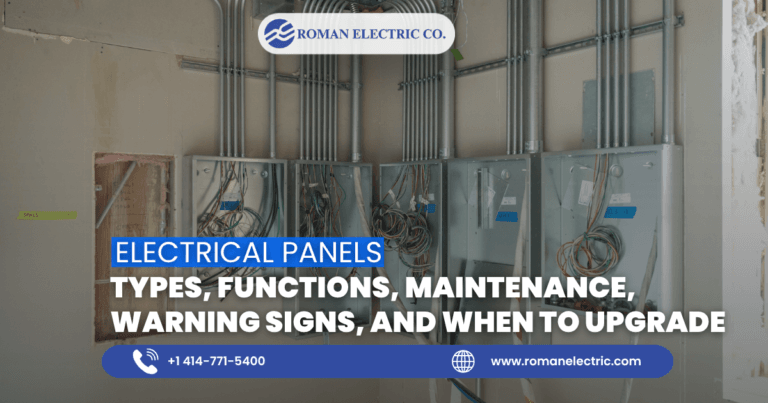
Three feet. That’s the minimum clear working space the NEC requires in front of electrical panels. Three feet doesn’t sound like much until you walk into a utility room where someone has been stacking boxes for five years.
This violation is everywhere. It’s also one of the few that creates an immediate safety problem beyond just a code issue. If something goes wrong with that panel and someone needs to get to it fast, boxes stacked in front of it are a serious problem.
Open Junction Boxes
Every junction box needs a cover. That’s it. That’s the whole requirement. And yet open junction boxes show up on inspection reports constantly because renovation work gets done, someone opens a box to tap into a circuit, and the cover doesn’t go back on.
Wire connections sitting open inside a box can be touched accidentally. They can also arc if something shifts or vibrates. It takes about two minutes to put a cover on a junction box. It almost never happens.
Grounding and Bonding Problems
This one is harder to spot without actually testing the system. Grounding and bonding protect people and equipment when a fault occurs by giving the current a safe path to follow. When it’s not done right, that protection isn’t there when it’s needed.
Older buildings are the most common place to find grounding issues because the requirements have evolved a lot over the decades. A building wired in the 1970s or 1980s may have been perfectly compliant at the time and be significantly out of step with current requirements now.
Wrong Breaker Size for the Wire
A breaker protects the wire behind it. If the breaker is rated higher than what the wire can handle, it won’t trip before the wire overheats. That’s a problem because overheated wire inside a wall is how electrical fires start.
This violation almost always happens when someone replaces a tripping breaker with a larger one to stop the nuisance of it tripping. The breaker was tripping for a reason. Putting in a bigger one doesn’t fix the reason. It just removes the warning system.
Why These Problems Build Up Over Time
| Common Cause | What It Usually Creates |
| Renovation work by residential contractors | Wrong wiring methods, open junction boxes |
| Adding equipment without upgrading the panel | Overloaded panels, wrong breaker sizes |
| Original installation under old codes | Missing GFCI, grounding problems |
| Nobody managing the utility room | Blocked panel clearance |
| Tenant modifications without permits | Unauthorized circuit changes |
| Deferred maintenance | Deteriorating connections, open boxes |
The pattern I see most often is gradual accumulation. Nobody makes one terrible decision that causes everything to go wrong at once. It’s five years of small shortcuts layered on top of each other until the building is carrying six problems simultaneously.
What Ignoring This Actually Costs
A failed inspection is the obvious one. Operations get delayed, reinspection fees add up, and getting work done on an emergency timeline costs more than scheduled work would have.
Insurance is a less obvious one but it matters a lot. When a commercial building has a fire and the investigation turns up electrical code violations that were never corrected, the insurance company has grounds to dispute the claim. That conversation does not go well for the building owner.
Personal injury liability is real too. Someone gets hurt in a building with a known electrical hazard that wasn’t fixed and the owner knew or should have known about it. That’s a difficult legal position to be in.
And then there’s the fire risk itself. The National Fire Protection Association tracks the causes of commercial building fires and electrical failures consistently rank among the leading causes. A lot of those fires started with conditions that a proper inspection would have found and fixed years earlier.
What Actually Helps
Get regular inspections done by a licensed commercial electrician. Not a residential electrician doing commercial work on the side. Someone who knows what commercial code actually requires and can spot the things that aren’t obvious without testing.
Use qualified contractors for electrical work during renovations. The savings from hiring whoever is cheapest usually disappear when the inspection catches the problems they left behind.
Keep the panel area clear. Make it a building policy. Put a sign on the wall if you have to. The clearance requirement exists for real reasons.
Don’t ignore the breakers that trip repeatedly. Find out why. Replacing it with a bigger breaker is not a fix. It’s making the problem invisible while making it more dangerous.
When tenants do modifications, require permits and licensed electricians. Unauthorized electrical work by tenants is one of the fastest ways to accumulate violations in a commercial building.
Roman Electric does commercial electrical inspections, code compliance assessments, panel upgrades, and all the work that comes out of finding problems. If you haven’t had someone walk through your building in a while, it’s worth doing before an inspector does it for you.
FAQs
Q: How often should a commercial building get an electrical inspection?
A: Every three to five years for most buildings. Older buildings or properties that have been through multiple renovations should be looked at more often than that.
Q: Who is responsible for violations in a leased space?
A: The lease terms usually spell it out. Building owners are typically responsible for base building systems. Tenants own what they modify. Both should care about staying compliant.
Q: What happens after a failed electrical inspection?
A: You get a list of what needs to be fixed before they’ll reinspect. Serious violations can affect occupancy until they’re corrected.
Q: Does an older building have to meet current code even if it was built legally?
A: Not always, but renovations and additions do have to meet current code. Some safety upgrades can also be required regardless of when the building was built.
Q: Is it expensive to fix code violations in a commercial building?
A: Depends completely on what’s wrong. Covering junction boxes costs almost nothing. A full panel upgrade is a bigger investment. You need an actual assessment to know what you’re looking at.
Conclusion
Electrical code violations don’t send a warning before something goes wrong. They just sit there in the walls and the panels until an inspector finds them or until something fails in a way that’s expensive, dangerous, or both. The building owners who stay ahead of this stuff spend less money over time, carry less liability, and don’t get the phone call nobody wants to get at two in the morning. If you want someone to walk through your building and give you an honest picture of where things stand, visit Roman Electric Co., Inc. and talk to people who find and fix electrical code violations in commercial buildings every single week.